


AI-generated wildlife images are not dead. They are everywhere.
They fill social feeds, marketplace listings, digital ads, and low-cost wall-art catalogs. But in 2026, a clear backlash is growing against synthetic wildlife imagery presented as real photography. Buyers, designers, conservationists, and serious collectors increasingly want to know what they are looking at, who made it, where it was made, and whether the story behind it is true.
That is why I believe authentic fine art photography prints still rule.
AI can create an attractive image in seconds. It cannot replace the real animal, the real habitat, the patience of observation, or the responsibility that comes with photographing wildlife ethically. For people looking for wildlife photography prints, nature wall art, or wildlife photography wall art, provenance now matters as much as appearance.
At Moss Apparel, every fine art image is an original photograph by me. Purchases also support conservation: 10% of profits are donated quarterly to conservation partners. Purchases over $60 qualify for free shipping.
The 2026 backlash is about trust
This is not simply an argument against new technology. It is an argument for accurate labeling.
AI-generated wildlife imagery can invent species, habitats, behaviors, and interactions. It can show animals doing things that never happened. In a conservation context, that creates a serious problem. Viewers may believe a fictional scene is documentary evidence, or develop an inaccurate understanding of how wildlife actually lives.
Recent reporting has connected synthetic wildlife imagery with misinformation, fake animal behavior, and contamination of citizen-science records. A 2026 research paper available through the National Library of Medicine describes the broader conservation risks. The Guardian has also reported on AI-generated and manipulated bird images affecting citizen science.
For decorative fantasy art, AI imagery can be clearly labeled and appreciated on its own terms. The problem begins when synthetic work is marketed as wildlife photography, fine art photography, or conservation photography without disclosure.
Authentic photography makes a different promise. It says that a real subject existed in a real place at a real moment.
A real photograph carries a real story
My photograph Hawks in Flight Aluminum Wall Art by Robert Moss – Nature Wildlife Photography began with a moment I could not have planned.
In spring, while hiking in an open field along a stream in North Carolina, I heard a cry from above and looked up. A red-shouldered hawk was confronting, or mobbing, a red-tailed hawk. The two birds were moving quickly through the air in a territorial struggle.
I had to react immediately. I pulled out my camera and used a very high shutter speed to follow the action. The sun was behind the birds. The speed of the fight, the distance, and the need to keep still while tracking them made the photograph difficult. Much of it came down to being in the right place at the right time.
That is the difference between an authentic wildlife photograph and an invented scene. The image is not only a picture of two hawks. It is a record of behavior, place, timing, and uncertainty.
The product is printed on 3mm Aluminum DIBOND with a direct UV print, a matte glare-free finish, and a hanging kit included.
SHOP HAWKS IN FLIGHT ALUMINUM WALL ART
Authentic wildlife photography gives interiors more meaning
The best nature wall art does more than fill an empty space. It gives the room a point of connection.
A synthetic image may look dramatic, but it often has no verifiable relationship to the natural world. A real photograph can bring a specific place into the room. It can start a conversation about migration, habitat, animal behavior, or conservation.
That matters in residential interiors, offices, hospitality spaces, and professional environments. Interior designers and art buyers increasingly need artwork that feels distinctive and has a clear point of view. Original wildlife photography offers both visual impact and context.
Three Zebras Crossing: movement in a real landscape
Three Zebras Crossing Aluminum Wall Art by Robert Moss – Wildlife Fine Art Photography presents three zebras crossing a road in South Africa.

The composition works because the animals are part of a real landscape and a recognizable moment of movement. The road introduces a human element, while the zebras remain the focus. It is clean, direct, and easy to place in a contemporary interior.
This is the kind of wildlife photography wall art that works as a focal point without becoming visually excessive. The product page specifies a 3mm Aluminum DIBOND panel, a matte glare-free direct print, and a hanging kit.
SHOP THREE ZEBRAS CROSSING ALUMINUM WALL ART
Conservation integrity matters
A photograph connected to conservation should be handled with particular care. The image must be real, and the conservation claim must be clear.
The Caribbean Black Tip Reef Shark Aluminum Photograph by Robert Moss was captured in Bimini, Bahamas. The subject is a blacktip reef shark in its natural marine environment. This is not a fictional ocean scene assembled from prompts. It is an authentic photograph connected to a real location and a real conservation concern.
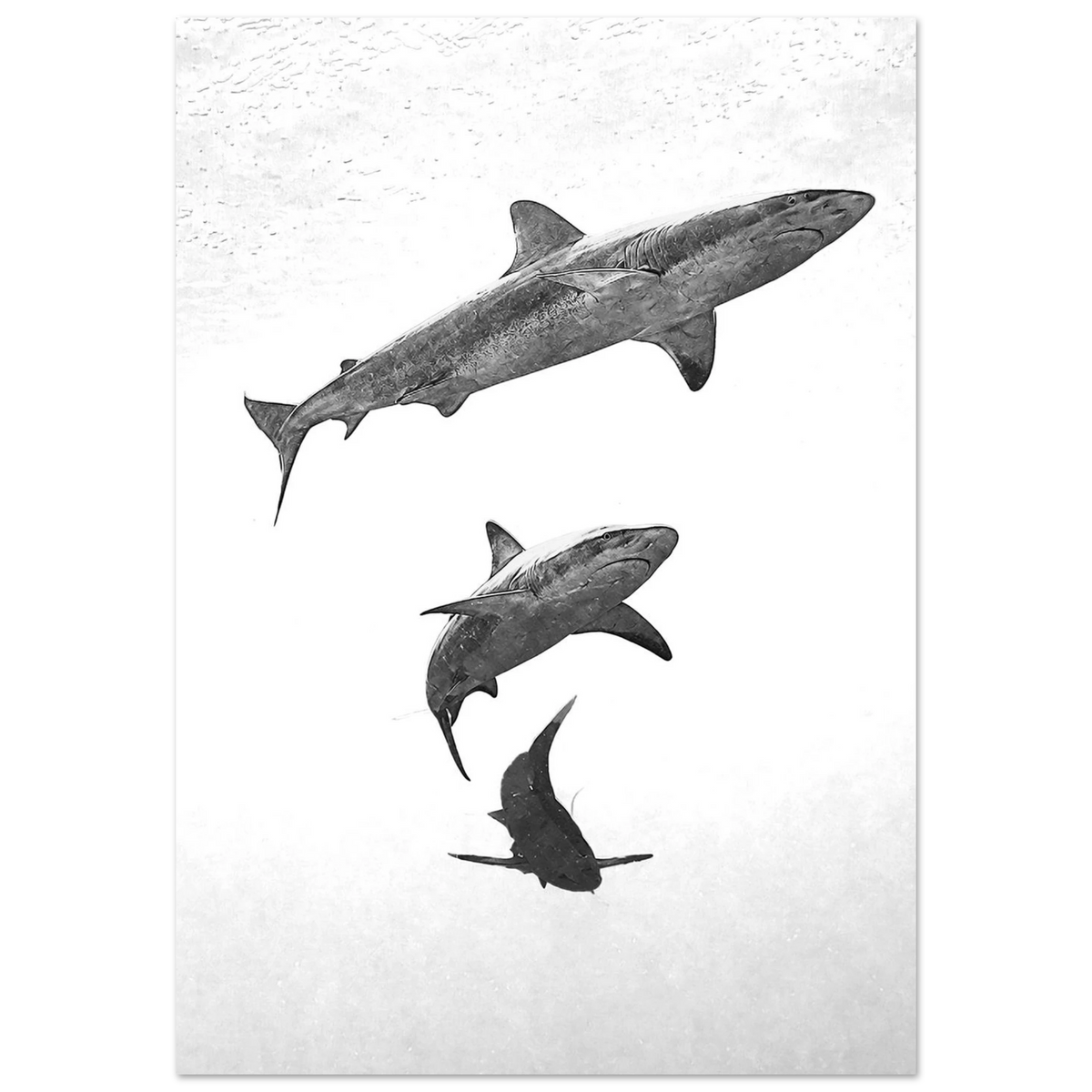
For this work, 10% of profits are donated quarterly to conservation partners, including the Bimini Shark Lab. The artwork therefore connects visual appreciation with direct support for shark conservation.
The print is made on 3mm Aluminum DIBOND with a direct UV print, a matte glare-free finish, and a hanging kit included. The material keeps the presentation clean and contemporary, making it suitable for a home, office, coastal interior, or professional gallery wall.
SHOP CARIBBEAN BLACK TIP REEF SHARK ALUMINUM PHOTOGRAPH
Print quality still matters
Authenticity is essential, but it is not the only reason collectors choose physical photography.
A quality print should present detail clearly, hold its color, and fit the space where it will be displayed. The substrate affects the entire experience. Aluminum DIBOND gives these photographs a clean, rigid presentation with a modern profile. The matte glare-free finish helps the image remain readable under changing indoor light.
That is especially important with wildlife photography. Fur, feathers, skin, water, dust, and grass all depend on accurate detail. When the print is poorly produced, the photograph loses some of its impact.
On Guard: quiet strength in Botswana
On Guard Aluminum Print by Robert Moss – Wildlife Photography Wall Art features two water buffalo photographed in Botswana. One stands watch while the other rests nearby.
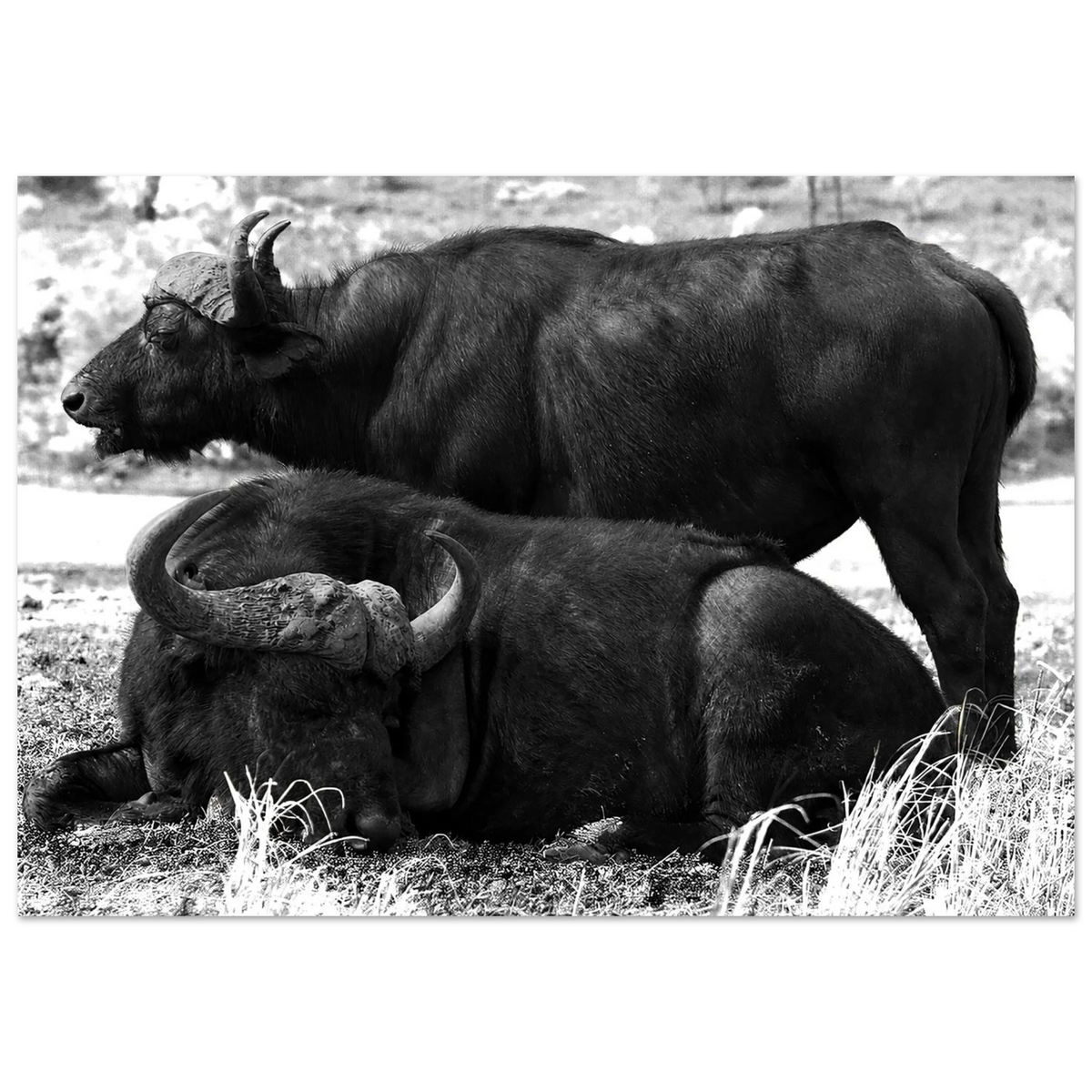
The image is powerful without relying on artificial drama. It shows strength, alertness, and companionship in a quiet moment. That restraint is one reason real wildlife photography continues to work so well as nature wall art. The image gives viewers room to look, notice, and interpret.
The product page specifies a 3mm Aluminum DIBOND panel, a direct print with a matte glare-free finish, and a hanging kit included.
How to choose authentic wildlife photography prints in 2026
Before buying, I recommend asking five simple questions:
-
Is the work clearly labeled as photography or AI art?
“Photorealistic” does not mean photographic. -
Is the artist identified?
A named photographer provides accountability and a starting point for verification. -
Is the location or subject documented?
Specific species and places create useful context. -
Is the conservation connection transparent?
If a purchase supports conservation, the donation model should be stated plainly. -
Are the print materials explained?
Look for clear information about the substrate, finish, and hanging method.
These questions are especially important for buyers searching for fine art photography prints, wildlife photography prints, and wildlife photography wall art. The strongest work combines authenticity, visual quality, and a credible human story.
AI-generated wildlife images are not dead: but authenticity wins
AI-generated wall art will remain part of the market. It is fast, inexpensive, and capable of producing attractive decorative images.
But it is not authentic fine art photography.
When buyers want a real connection to wildlife, they are looking for more than an impressive animal portrait. They want a photograph made by a person who observed the world, respected the subject, and can explain where the image came from. They want work that does not misrepresent nature. Increasingly, they also want their purchase to support the ecosystems represented on the wall.
That is why authentic wildlife photography prints still rule in 2026.
EXPLORE MOSS FINE ART PHOTOGRAPHY PRINTS
Verified Robert Moss Bio
For me, nature photography begins with respect. I believe the best wildlife photographs come from observing rather than interfering: allowing an animal, landscape, or moment to exist naturally and being patient enough to capture it as it unfolds.
My goal is not simply to photograph wildlife, but to create images that convey the character, beauty, scale, and vulnerability of the natural world. From wildlife encounters to remote landscapes and underwater environments, I am drawn to moments that remind us how extraordinary the wild still is.
I have spent 10 years photographing across North America, Central America, Southern Africa, Sri Lanka, Australia, the Caribbean, and Europe. My specialties include North American wildlife and landscapes, the American West, mountain scenes, hawks, pronghorn, bison, deserts, coyotes, lakes, ocean scenes, sharks, fish, underwater life, and mangroves.
I never stress, chase, bait, corner, touch, or significantly alter an animal’s behavior for a photograph. I use long lenses and let wildlife control the encounter.
That philosophy carries through to Moss Apparel and Moss Fine Art. The photographs are not only meant to be seen; they are intended to create a greater connection with the places and species they represent. Through Moss Apparel and Moss Fine Art, 10% of profits support nonprofit organizations working in wildlife conservation, habitat protection, and ocean restoration.
Robert Moss, Founder and Photographer, Moss Apparel


