


FREE SHIPPING ON ORDERS OVER $60
Landscape photography prints can change the atmosphere of a room without competing with the furniture, architecture, or daily function of the space. The right image adds depth, texture, and a clear connection to the natural world.
For homeowners, landscape wall art can become the focal point above a sofa, bed, console, or dining table. For interior designers, it can provide a refined finishing element for offices, hospitality spaces, waiting areas, and contemporary interiors.
The best choice depends on four practical decisions:
- The mood you want to create.
- The artwork’s scale and orientation.
- The print material and finish.
- How the image works with the room’s existing colors and light.
1. Start with the room, not the artwork
Before browsing fine art photography prints, assess the space where the work will hang.
Measure the wall. Note the width of the furniture below it. Look at the natural and artificial light. Then decide how you want the room to feel.
For calm, quiet spaces
Bedrooms, reading areas, and private offices often benefit from restrained landscapes with strong shapes and balanced composition. Black-and-white photography, soft skies, mountain forms, and open horizons can create a focused, peaceful atmosphere.
For more visual energy
Living rooms, reception areas, and creative workspaces can support higher contrast. Rock formations, dramatic clouds, deep shadows, and unusual natural structures provide stronger visual impact.
For contemporary interiors
Modern homes and professional offices often work well with clean compositions and uncluttered presentation. Metal photography prints are especially effective in these settings because they combine a sleek surface with crisp photographic detail.
A landscape print should feel connected to the room. It does not need to match every color exactly. It should support the existing palette through contrast, repetition, or a complementary tone.
2. Choose a subject with lasting visual value
Trends change. Strong composition lasts longer.
When evaluating landscape photography prints, look for an image with a clear subject, a stable visual structure, and enough detail to reward repeated viewing. Mountains, arches, desert formations, forests, shorelines, and open plains can all work as nature wall art when the photograph has a defined point of focus.
Consider these questions:
- Does the image have one dominant subject?
- Is there enough open space around the main form?
- Does the composition feel balanced from across the room?
- Will the subject still interest you after the initial impact?
- Does the artwork connect with a place, memory, or landscape you value?
For a minimalist space, a bold natural structure can provide the necessary contrast. For a room with patterned rugs, textured upholstery, or architectural detail, a simpler landscape may create balance.
3. Match the artwork’s scale to the wall
Scale is one of the most common reasons wall art feels either powerful or undersized.
A small print can disappear above a large sofa or bed. A very large print can overwhelm a narrow wall. As a general starting point, artwork placed above furniture should occupy a substantial portion of the furniture’s width while leaving enough space around the composition.
Use these practical guidelines:
- Choose a horizontal print for sofas, desks, consoles, and wide headboards.
- Choose a larger format when the artwork is intended to be the room’s primary focal point.
- Use smaller sizes for hallways, shelves, compact offices, and gallery arrangements.
- Leave visual space around the artwork so the image can be read clearly.
- Use multiple coordinated pieces only when the wall and room can support additional visual structure.
Large nature wall art works particularly well in rooms with high ceilings, long walls, open floor plans, and commercial interiors. A single strong landscape can make a large wall feel intentional without requiring a complex gallery arrangement.
For smaller rooms, a medium-sized print can still create depth. The key is to maintain proportion between the artwork, nearby furniture, and surrounding negative space.
4. Select a print material that suits the setting
The print medium affects both appearance and everyday practicality.
Paper prints offer a traditional gallery presentation and can be paired with custom frames. Canvas provides a softer, more relaxed surface. Metal photography prints offer a clean, contemporary finish that works well in modern residential and professional spaces.
The Sunlit Monolith with Arch and Hillside Aluminum Print by Robert Moss is made on premium Aluminum DIBOND®. The panel has two white aluminum layers with a black polyethylene core, creating a rigid 3mm base.
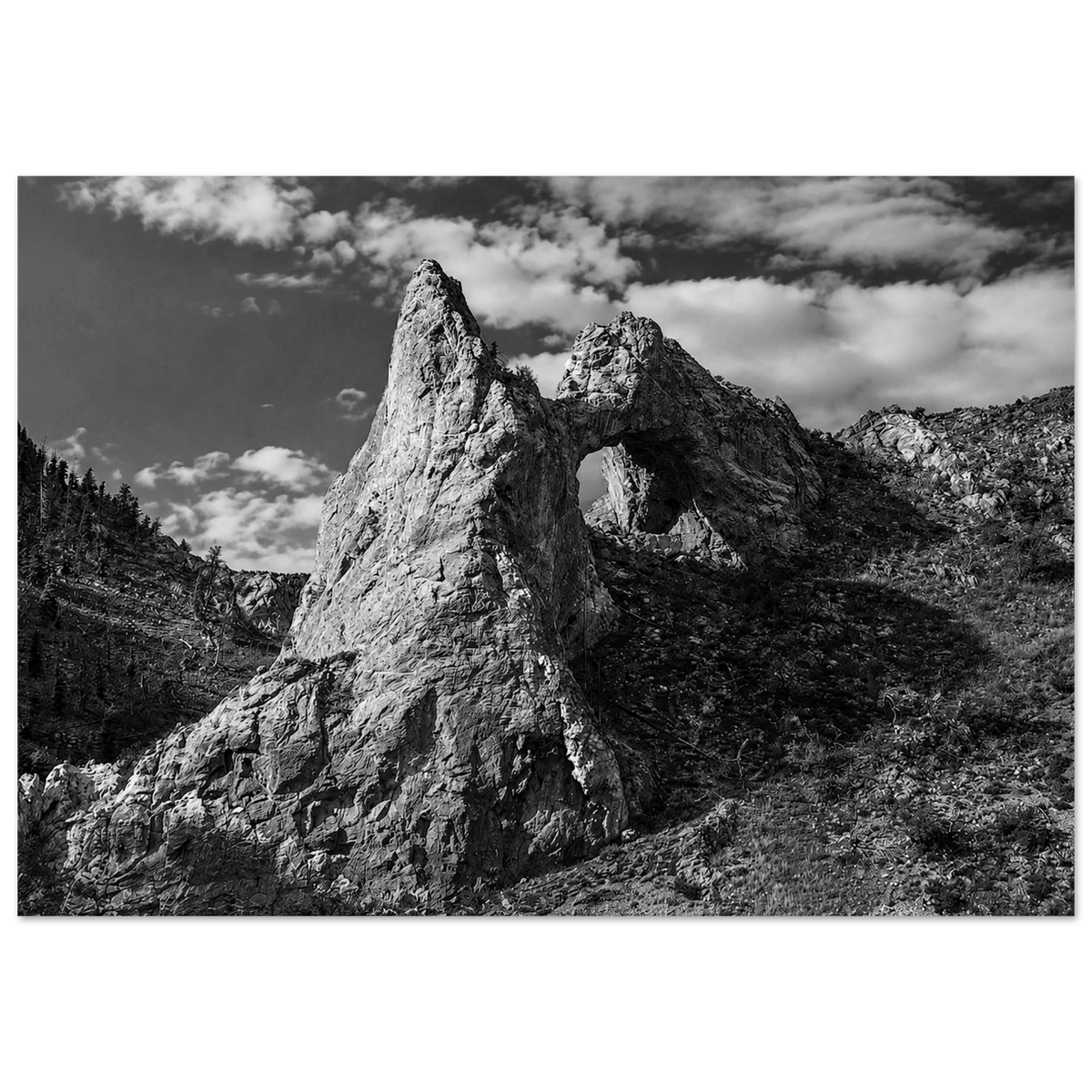
The artwork was captured in Nevada and features a striking rock formation, natural arch, hillside, and dramatic sky. The black-and-white presentation gives the image a strong graphic quality while keeping the subject matter grounded in the landscape.
The print uses direct UV printing for vivid color reproduction and crisp detail. Its matte, glare-free finish helps maintain clarity in rooms with changing light. Bright areas have a subtle silky gloss, adding slight visual depth without creating a highly reflective surface.
The panel is UV and moisture resistant, and a hanging kit is included.
SHOP SUNLIT MONOLITH WITH ARCH AND HILLSIDE
5. Think about lighting before you buy
Lighting can change how landscape wall art looks throughout the day.
A print placed opposite a bright window may receive strong reflected light. In that position, a matte finish can be more practical than a glossy surface. For darker offices or rooms with controlled lighting, a high-contrast photograph can help add definition.
Avoid placing artwork where direct sunlight falls on it for long periods. Even durable materials should be positioned thoughtfully. Keep the artwork away from areas where it may be exposed to water, steam, or frequent contact.
The Aluminum DIBOND® construction used for Sunlit Monolith with Arch and Hillside Aluminum Print by Robert Moss is moisture resistant and UV resistant, making it suitable for many indoor home and office settings.
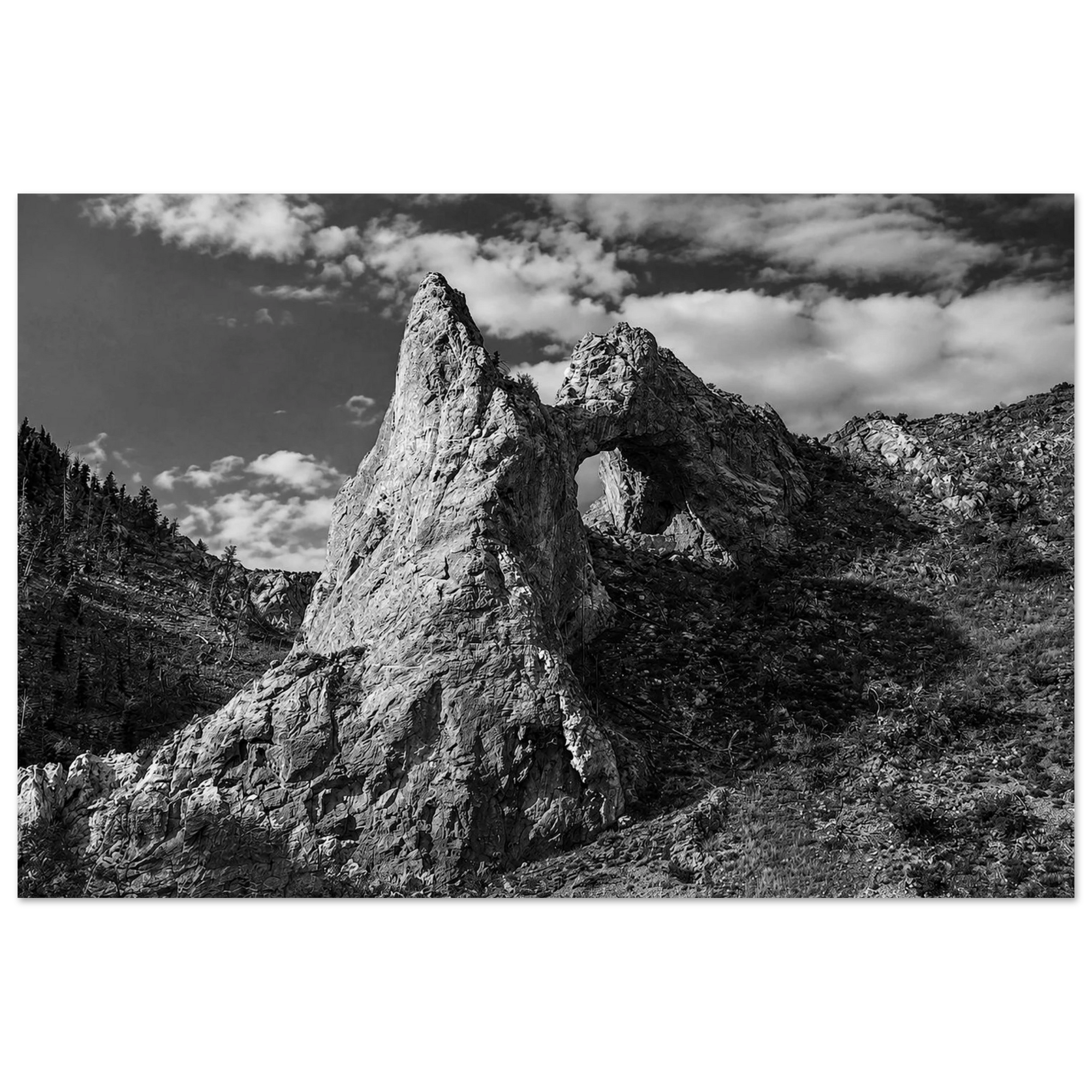
For interior designers, the matte surface is also useful when artwork must remain visible from multiple positions in a room. It reduces the distraction of glare and keeps the focus on the photograph.
6. Choose a size that fits your design plan
The featured aluminum print is available in four sizes:
- 20 × 30 cm / 8 × 12 inches
- 40 × 60 cm / 16 × 24 inches
- 60 × 90 cm / 24 × 36 inches
- 70 × 100 cm / 28 × 40 inches
The 8 × 12-inch option can work in a smaller office, hallway, bedroom, or coordinated arrangement. The 24 × 36-inch and 28 × 40-inch options provide more presence above furniture or on a larger feature wall.
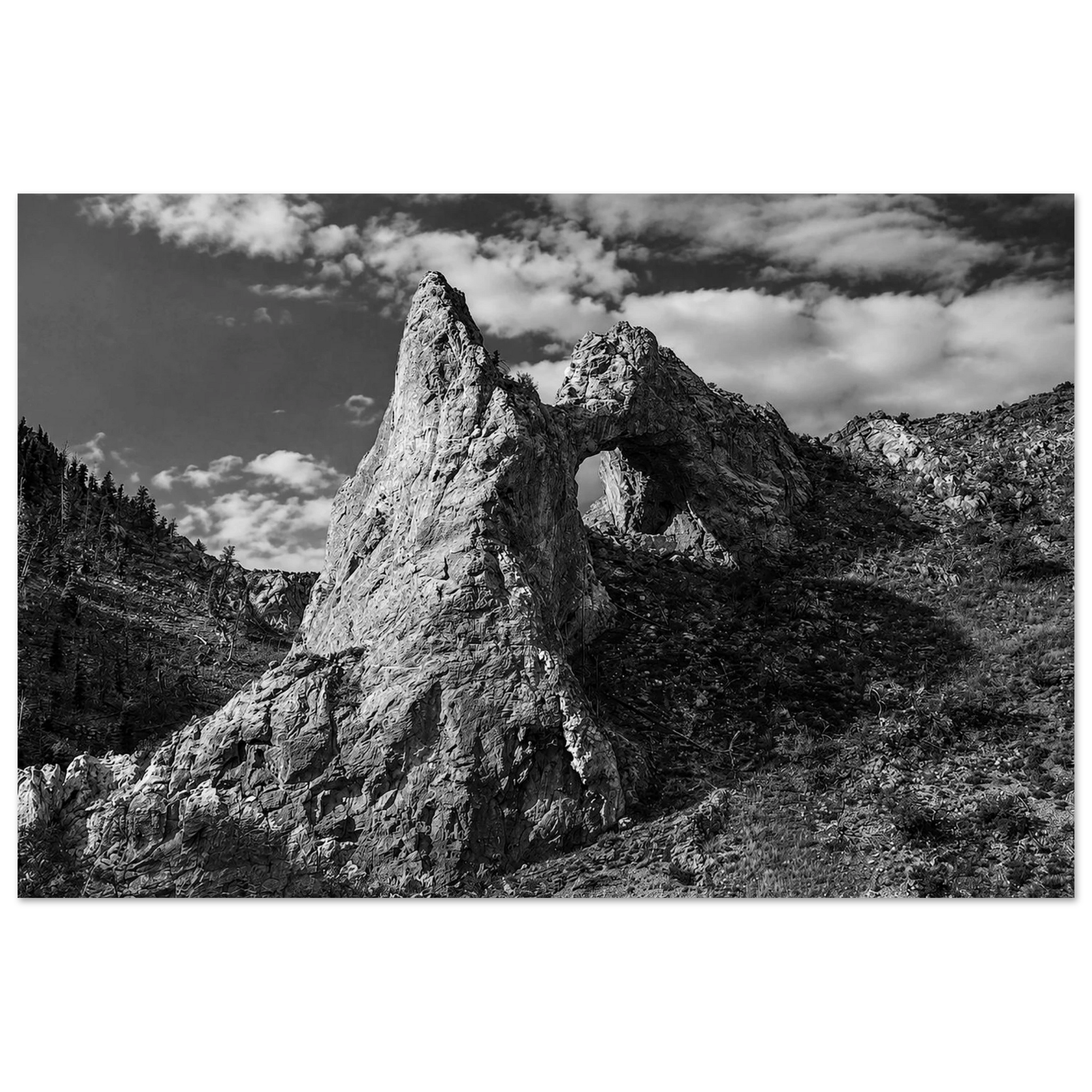
Before ordering, mark the intended dimensions on the wall with painter’s tape. Step back several feet and review the proportion from common viewing positions. This simple test can prevent an artwork from feeling too small or too dominant.
7. Use nature wall decor with purpose
Nature wall decor should do more than fill empty space. It should contribute to the function and identity of the room.
In a home, landscape photography can make a bedroom feel more settled, add structure to a living room, or create a stronger sense of place in a home office.
In a professional setting, nature wall art can soften hard architectural lines and make a reception or meeting area feel more welcoming. A desert or mountain photograph can also support a neutral material palette built around wood, stone, concrete, black metal, or white walls.
For designers, the strongest results usually come from treating the photograph as part of the overall plan. Consider:
- Wall color.
- Furniture width.
- Hardware and frame tones.
- Light direction.
- Sightlines from entrances and seating.
- Whether the artwork is a focal point or supporting element.
8. Buy from a collection with a clear purpose
A fine art purchase is more meaningful when the image, material, and mission are clear.
The Moss Apparel photo collection includes wildlife and landscape photography by Robert Moss, presented in formats designed for home and office interiors. Every purchase supports the company’s conservation mission: 10% of profits support conservation.
The featured artwork is available directly from the product page, where you can review the available sizes, material, finish, hanging kit, and shipping information before ordering.
Orders over $60 receive free shipping. Returns are available within 10 days according to the store’s published policy.
VIEW THE MOSS APPAREL PHOTO COLLECTION
Final checklist for choosing landscape photography prints
Before you purchase, confirm the following:
- The artwork suits the room’s intended mood.
- The image has a strong focal point and lasting visual interest.
- The size is proportional to the wall and nearby furniture.
- The finish works with the room’s lighting.
- The material suits the demands of the space.
- The product page clearly lists specifications and installation details.
- The purchase supports a mission you value.
The right landscape photography print can provide beauty, structure, and a direct connection to the natural world. For a modern home or office, Sunlit Monolith with Arch and Hillside Aluminum Print by Robert Moss offers a durable Aluminum DIBOND® presentation, a glare-free matte finish, and a dramatic Nevada landscape captured in black and white.
About Robert Moss
For me, nature photography begins with respect. I believe the best wildlife photographs come from observing rather than interfering by allowing an animal, landscape, or moment to exist naturally and being patient enough to capture it as it unfolds. My goal is not simply to photograph wildlife, but to create images that convey the character, beauty, scale, and vulnerability of the natural world.
From wildlife encounters to remote landscapes and underwater environments, I am drawn to moments that remind us how extraordinary the wild still is. I approach each photograph with the intention of keeping the scene authentic, preserving the natural behavior of the subject and the atmosphere of the place.
That philosophy carries through to Moss Apparel and Moss Fine Art. The photographs are not only meant to be seen; they are intended to create a greater connection with the places and species they represent. Conservation is at the heart of that mission because this approach becomes harder each year as the world changes, wildlife numbers decline, and natural spaces are threatened.
Through Moss Apparel and Moss Fine Art, 10% of profits support nonprofit organizations working in wildlife conservation, habitat protection, and ocean restoration.
My hope is simple, create photographs that bring people closer to nature while helping protect the wild places and wildlife that made those photographs possible.
Robert Moss
Founder & Photographer, Moss Apparel


