


FREE SHIPPING FOR ORDERS OVER $60
Ocean wall art can do more than complete a room. The right piece can establish a focal point, support a thoughtful interior palette, and keep a visible connection to the wildlife and habitats that matter to you.
For homeowners and interior designers, the best ocean photography prints balance three priorities:
- A strong visual subject.
- A format and finish suited to the space.
- A clear conservation connection.
At Moss Apparel, the fine art collection features real wildlife and landscape photography by Robert Moss, printed on durable aluminum. Selected artwork supports conservation through a defined donation model: 10% of profits from relevant sales support nonprofit partners working in shark research, ocean restoration, and plastic pollution reduction.
1. Start with the subject and the mood
The subject determines how ocean wall art changes the feeling of a room.
A shark photograph can add structure, movement, and contrast to a neutral living room or modern office. A reef scene can create a calmer atmosphere in a bedroom, reading area, or coastal-inspired space. A school of fish can introduce rhythm without overpowering the rest of the decor.
Before choosing a print, decide what you want the artwork to do:
- Create a dramatic focal point: Choose a large shark or marine-life portrait.
- Add a calm, coastal mood: Look for open water, reef scenes, or flowing movement.
- Support a minimalist interior: Consider black-and-white ocean photography prints.
- Start a conversation: Select wildlife photography prints connected to a specific conservation issue.
This approach prevents ocean-themed decor from becoming generic. The image should have a clear subject, a defined point of view, and enough visual strength to work at the size you need.
2. Choose a format that fits the wall
Scale is one of the most important decisions in fine art photography prints.
Above a sofa, console, or bed, a larger horizontal piece usually creates a more finished look than a small print surrounded by empty wall. In a hallway, entryway, or home office, smaller formats can work well as individual pieces or as part of a planned grouping.
Use the furniture below the artwork as a guide:
- A single statement piece should generally be narrower than the furniture beneath it.
- Large rooms can support larger artwork with stronger contrast.
- Narrow walls benefit from a vertical or compact format.
- Gallery walls work best when the subjects and finishes share a visual relationship.
The aluminum artwork in the Moss Apparel collection is available in multiple sizes, making it easier to match the piece to the room rather than forcing the room to accommodate the art.
3. Consider the medium: aluminum for a clean, durable finish
Aluminum is a practical choice for contemporary nature wall decor.
The artwork is printed on Aluminum DIBOND®, a lightweight material with a rigid 3mm profile. The matte, glare-free surface helps preserve detail under indoor lighting, while the durable construction makes the work suitable for living rooms, offices, galleries, and other frequently used spaces.
Aluminum also offers a more structured appearance than canvas. It keeps edges crisp and supports the high-contrast look often associated with underwater and wildlife photography.
It is especially useful when you want:
- A modern, gallery-style presentation.
- A low-glare surface.
- A lightweight but rigid panel.
- Resistance to moisture and UV exposure.
- Easy installation with a professional hanging kit.
For interior designers, this makes aluminum a versatile option across residential and commercial projects. It can sit comfortably alongside wood, stone, linen, plaster, and other natural materials.
4. A dramatic choice for modern interiors
Great Hammerhead Shark Aluminum Wall Art - Conservation Edition is designed for spaces that need a strong marine subject and a direct conservation connection.
The photograph presents the great hammerhead shark as the central visual element. Its form creates movement across the wall, while the ocean setting keeps the work connected to a broader marine environment. The image can work as a focal point in a modern living room, home office, library, or hospitality space.
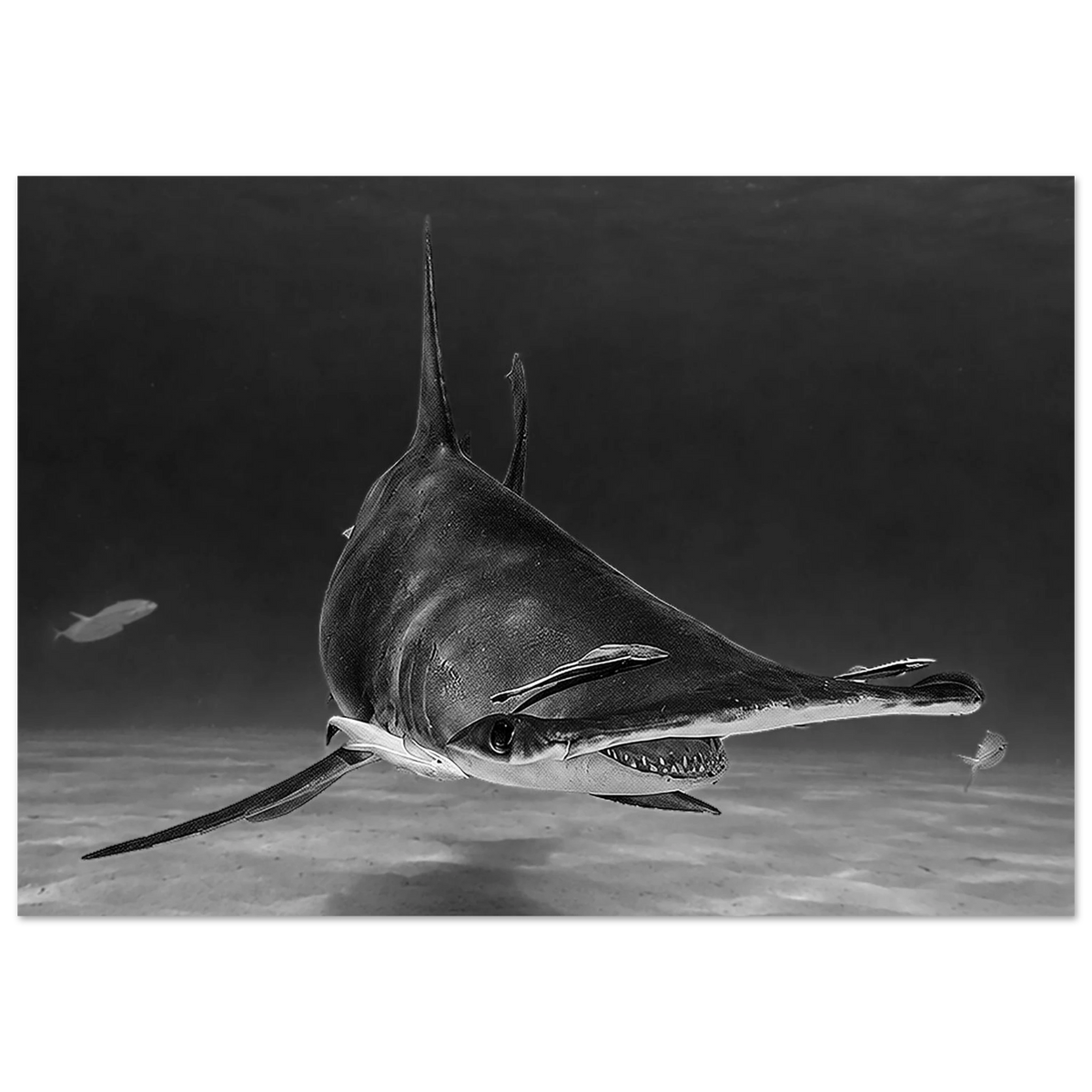
Available sizes include 20×28 inches, 24×36 inches, and 28×40 inches. The larger options are well suited to a main wall, while the smaller size can work above a cabinet, desk, or console.
The piece also supports Moss Apparel’s partnership with the Bimini Shark Lab. The lab’s official mission focuses on understanding the biology of sharks and rays and their role in marine ecosystems through field and laboratory research. Its work also includes education, conservation outreach, and training for future marine scientists.
10% of profits from the relevant Moss Apparel shark collection support this conservation mission.
SHOP GREAT HAMMERHEAD SHARK WALL ART
@BIMINISHARKLAB
The Bimini Shark Lab’s official Instagram account is a useful resource for learning more about shark research, education, and conservation work.
5. Use black-and-white photography for a quieter statement
Not every ocean wall art piece needs bright blue water or saturated reef color. Black-and-white photography can be more flexible in a carefully designed interior.
Monochrome artwork works well with:
- Warm white walls.
- Black metal or dark wood furniture.
- Neutral upholstery.
- Concrete, stone, and natural fiber textures.
- Minimalist or Scandinavian-inspired interiors.
It also keeps the focus on shape, pattern, contrast, and movement. That makes it a strong option when the room already has a defined color palette.
School of Fish Ocean Photography Aluminum Photograph – Costa Rica Reef Art by Robert Moss features a school of fish moving near a volcanic reef off the coast of Costa Rica. The composition adds energy, but the black-and-white treatment keeps the overall presentation refined and restrained.
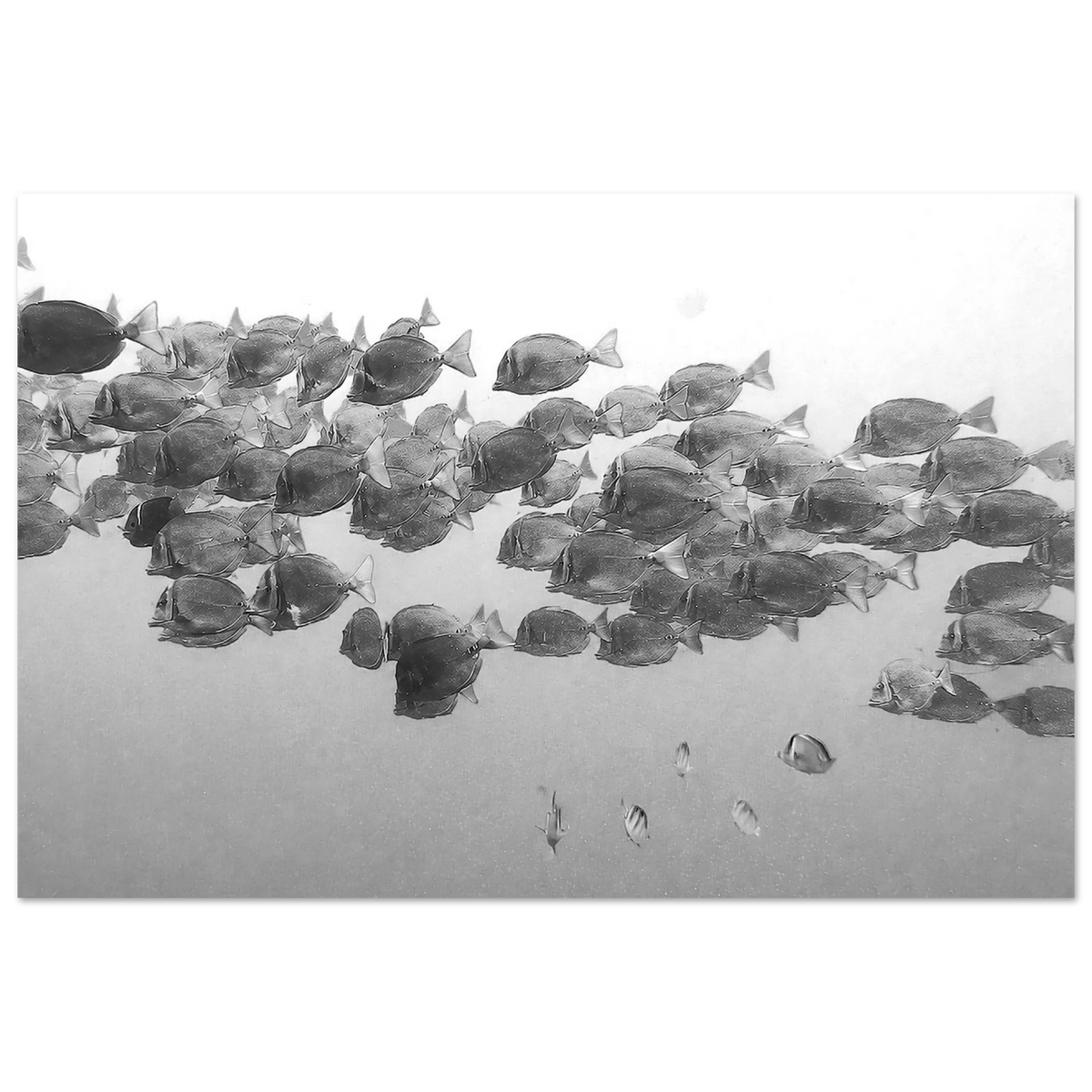
This piece is available in 8×12 inches, 16×24 inches, and 24×36 inches. The smaller size can sit comfortably in a home office or bedroom, while the largest option can anchor a living room wall or professional workspace.
The artwork is printed on 3mm Aluminum DIBOND® with a matte, glare-free finish. It also includes a professional hanging kit and is designed to resist UV exposure and moisture.
The purchase supports Moss Apparel’s partnership with Seven Clean Seas, an ocean-impact organization focused on preventing ocean plastic pollution and building recovery projects in heavily affected areas. Its work includes river collection, offshore recovery, coastal cleanups, household waste management, and community education.
10% of profits from the relevant artwork support this ocean-focused conservation effort.
SHOP SCHOOL OF FISH OCEAN PHOTOGRAPHY
@SEVENCLEANSEAS
Follow Seven Clean Seas on Instagram for updates on ocean plastic recovery, community impact, and its long-term goal of preventing plastic pollution at scale.
6. Look for a specific, transparent conservation connection
Conservation-minded art should make its impact easy to understand.
When comparing ocean photography prints, look for:
- The name of the nonprofit or conservation organization.
- A clear percentage or donation model.
- A description of the organization’s actual work.
- A direct link to the partner.
- A durable product designed to remain in use for years.
A strong conservation connection does not replace good design. It strengthens the decision behind the purchase. The artwork should still suit the room, hold attention, and meet the quality expectations of a fine art buyer.
At Moss Apparel, the images are created from real wildlife and landscapes. The artwork is intended to connect viewers with the species and places represented while helping fund conservation work through 10% of profits.
7. Build a room around the artwork, not a theme
Ocean wall art does not require a fully coastal room.
A single marine photograph can work in a contemporary, rustic, industrial, or traditional interior. The key is to repeat one or two visual qualities rather than matching every object to an ocean theme.
For example:
- Repeat black-and-white tones with dark furniture or metal accents.
- Pair blue-gray ocean imagery with linen, wool, or natural wood.
- Use a shark photograph to add contrast to soft neutral furnishings.
- Place reef-inspired artwork near stone, terrazzo, or textured plaster.
- Keep surrounding decor simple so the photograph remains the focal point.
The strongest nature wall decor feels intentional. It does not need shells, nautical signs, or bright seaside accessories to communicate its subject.
FINAL CHECKLIST
Before purchasing ocean wall art, confirm:
- The subject fits the room’s mood.
- The size works with the wall and furniture.
- The medium suits the lighting and traffic level.
- The image has a clear, authentic point of view.
- The conservation claim is specific.
- The product page lists the exact materials, dimensions, and finish.
- The purchase supports a named organization.
Explore the complete Moss Apparel Fine Art Photography Collection for ocean photography prints, wildlife photography prints, and nature wall decor created by Robert Moss.
Verified Robert Moss Bio
For me, nature photography begins with respect. I believe the best wildlife photographs come from observing rather than interfering: allowing an animal, landscape, or moment to exist naturally and being patient enough to capture it as it unfolds.
My goal is not simply to photograph wildlife, but to create images that convey the character, beauty, scale, and vulnerability of the natural world. From wildlife encounters to remote landscapes and underwater environments, I am drawn to moments that remind us how extraordinary the wild still is.
I approach each photograph with the intention of keeping the scene authentic, preserving the natural behavior of the subject and the atmosphere of the place. That philosophy carries through to Moss Apparel and Moss Fine Art. The photographs are not only meant to be seen; they are intended to create a greater connection with the places and species they represent.
Through Moss Apparel and Moss Fine Art, 10% of profits support nonprofit organizations working in wildlife conservation, habitat protection, and ocean restoration.
Robert Moss
Founder & Photographer, Moss Apparel


