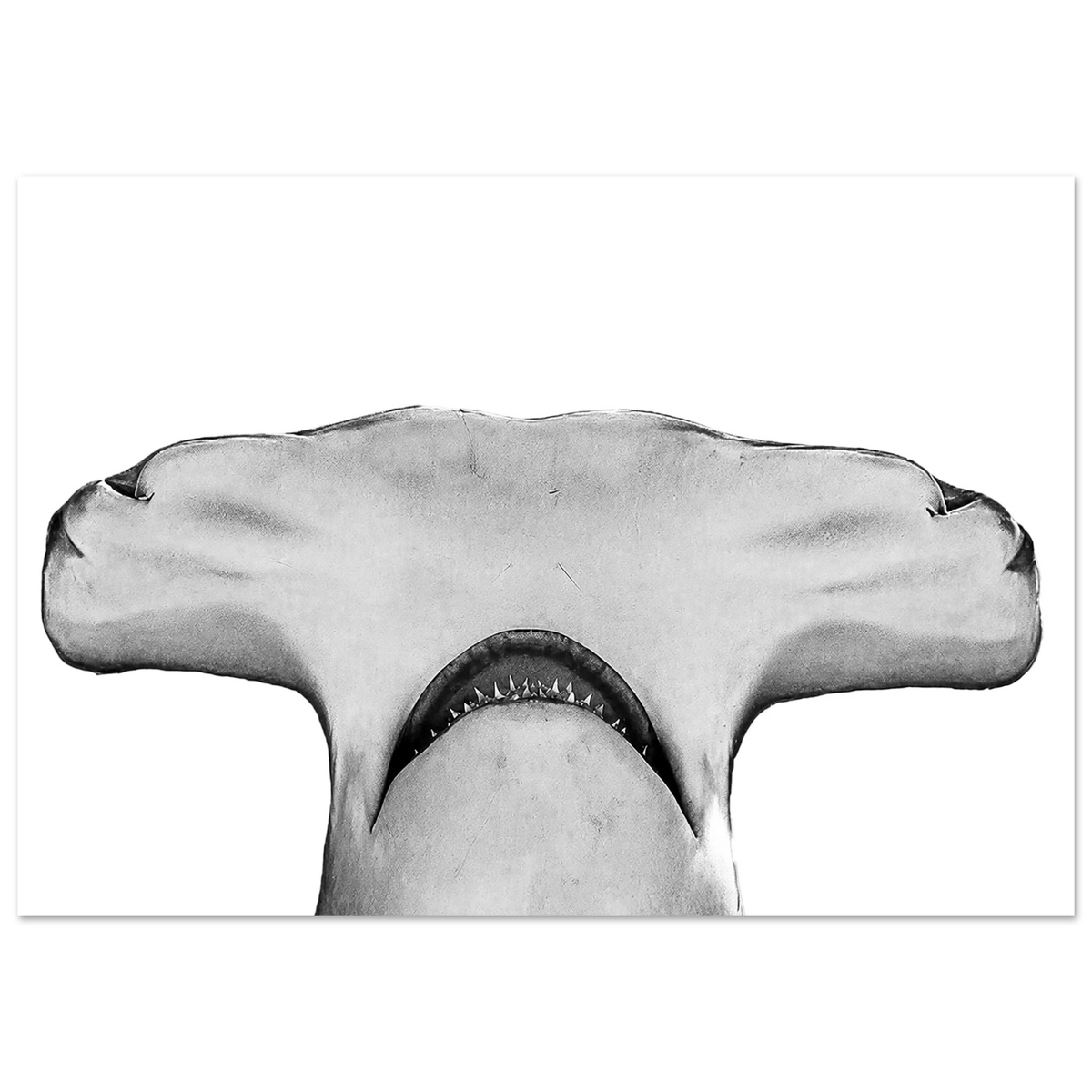
I took this photograph in the crystal-clear waters of Bimini, Bahamas, during a late-November scuba dive. I was underwater in a vast sandy desert: the kind of open sea floor Great Hammerhead Sharks favor as a hunting ground.
That encounter became the inspiration for Great Hammerhead Shark Aluminum Print – Underwater Photography by Robert Moss, a striking piece of shark wall art and fine art wildlife photography designed to bring the scale and presence of the ocean into a home, office, or professional space.
The image is available for $60.00 in four sizes. It is also part of the Moss Apparel Fine Art photography collection, where I share shark wall art and other photographs made in real encounters with wildlife and wild places.
The Bimini Dive
I was diving about 25 feet underwater, lying on the sandy sea floor. Around me was a wide, open underwater landscape with very little structure. No dense reef. No walls. No clutter. Just sand, clear water, and the space Great Hammerheads use to hunt.
Hammerheads favor these broad sandy areas because they use their large, distinctive heads to find prey hiding beneath the sand. Their head shape is not only visually remarkable; it is part of how they interact with this environment.
While I was lying on the ground, the sharks began moving in.
I turned onto my back and shot upward as one shark moved slowly above me. From that low angle, the animal filled the open water overhead. The perspective made the shark’s head shape especially powerful, while the sandy background kept the composition clean and direct.
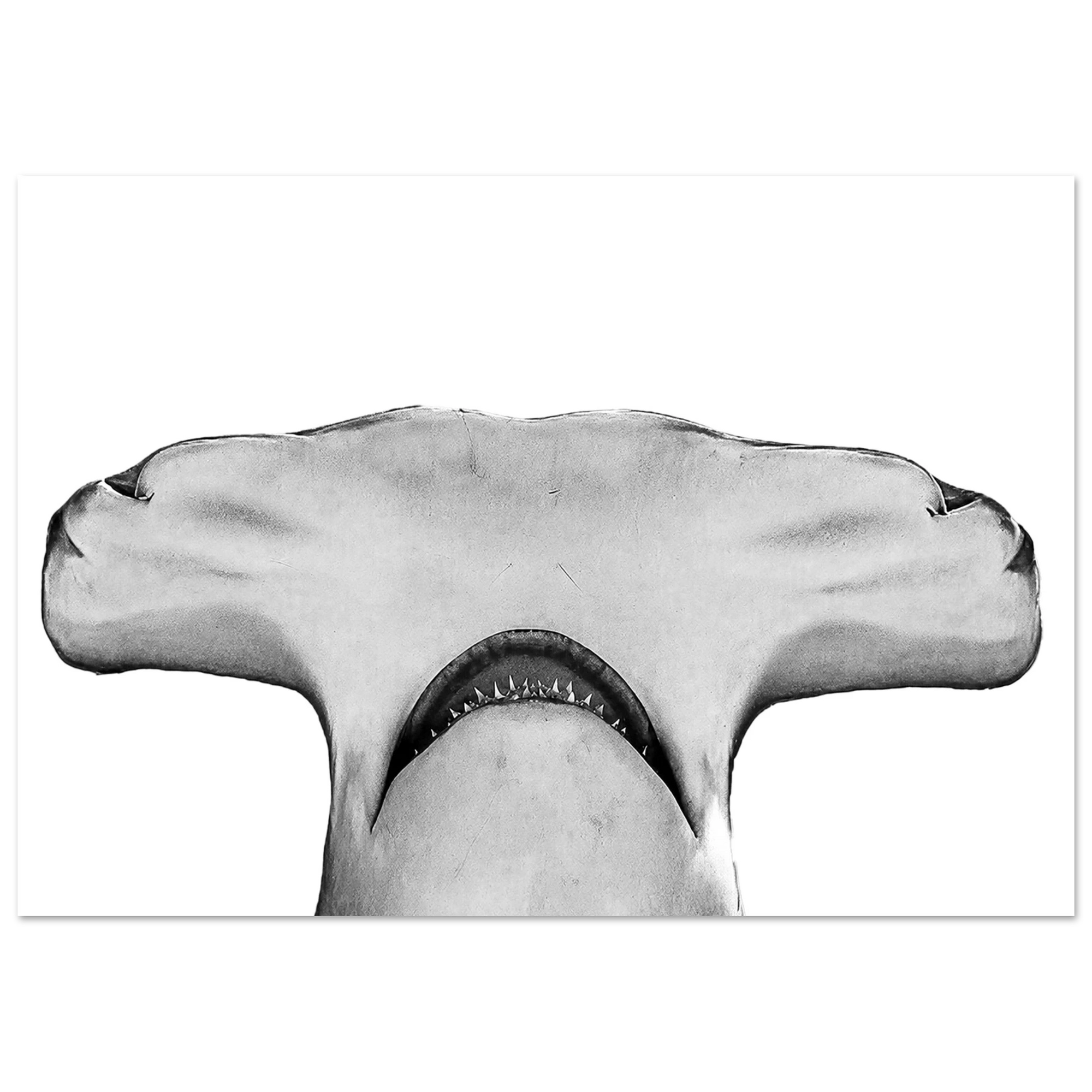
This was not a distant observation. I was close enough to photograph the animal clearly, while still allowing the shark to move naturally through the water. The result is a low-angle portrait that shows the Great Hammerhead as I experienced it: large, calm, and completely at home in its environment.
Photographing Without a Zoom
The technical challenge was simple and significant: I was underwater with a camera that had no zoom.
To make the photograph, I had to be right next to the sharks.
That changes the way I photograph. I could not stay far away and bring the subject closer through the lens. I had to position myself carefully, remain aware of the animal, and let the shark determine how close the encounter became.
Being underwater also changes the physical conditions of the photograph. I was lying on the sand at approximately 25 feet, watching the sharks approach and pass overhead. I had to respond to their movement in real time while maintaining a respectful distance and avoiding unnecessary interference.
What stayed with me most was how little mind the sharks gave humans. They moved through the water with their own purpose. They did not perform for the camera, and they did not need our attention. I was simply present in their environment for a short time.
That experience made me more aware of the importance of respect. Great Hammerheads are amazing animals, and photographing them requires patience, restraint, and an understanding that the encounter belongs to the animal: not the photographer.
Why This Moment Mattered
This moment made me fall in love with sharks.
I had the opportunity to see a Great Hammerhead at close range, moving slowly above me in clear Bahamian water. The experience was powerful because it was not dramatic in the way people often expect a shark encounter to be. The shark was not aggressive. It was not interested in me. It was simply moving through the place where it lived.
That calm behavior challenged the assumptions many people carry about sharks. It also reinforced what I believe wildlife photography should do: create a more accurate connection between people and the natural world.
A photograph can show the animal’s teeth and powerful shape, but it can also show composure. It can show distance, scale, and independence. In this image, I wanted the shark to remain the subject rather than turning the encounter into a story about human bravery.
When I look at the photograph, I remember how little attention the shark gave me. That is part of its strength. It reminds me that we need to be more respectful of these animals and the ocean environments they depend on.
The Underwater Composition
I photographed the shark from below, looking upward as it moved over me. This perspective emphasizes the Great Hammerhead’s distinctive head shape and gives the viewer a direct sense of the animal’s size.
The open sandy background is important to the composition. It keeps attention on the shark and reflects the actual environment where the encounter took place. The sand also creates contrast with the shark’s body, helping define the broad head, streamlined form, and formidable teeth.
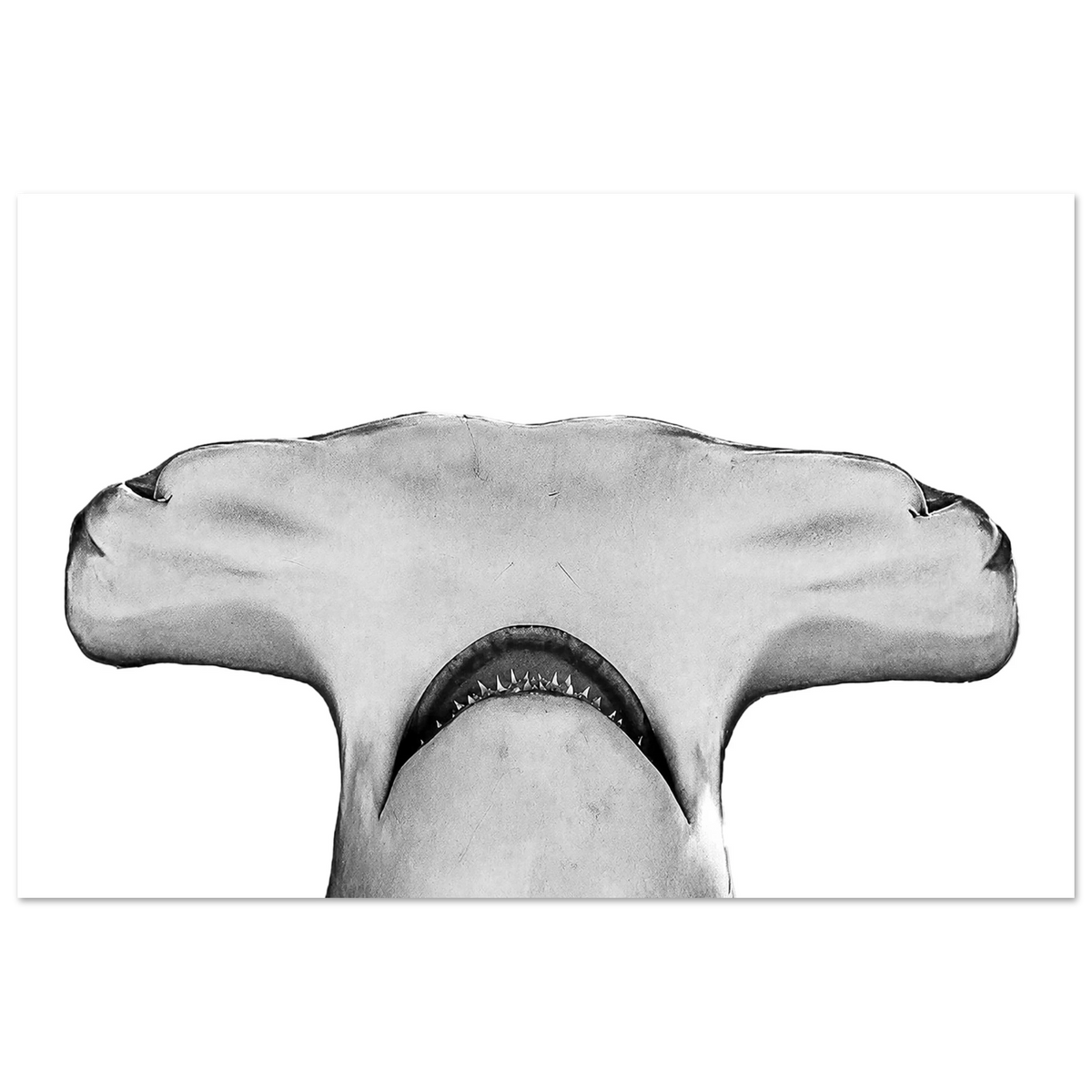
This is what I look for in wildlife photography prints: a real moment, a clear subject, and a perspective that communicates something about the animal. The photograph works as ocean photography prints for a marine-focused space, but it also fits naturally within animal wall art and modern nature wall decor.
Aluminum DIBOND Craft
I offer this image as Great Hammerhead Shark Aluminum Print – Underwater Photography by Robert Moss for a clean, contemporary presentation.
The print is crafted on high-quality Aluminum DIBOND, a durable and lightweight aluminum panel with a black polyethylene core. It has a rigid 3mm profile and a direct-print finish designed to preserve crisp detail and vivid color.
The matte, glare-free surface makes the artwork easier to view in changing light. Bright areas have a subtle silky gloss, while the overall finish remains understated. The panel is also UV- and moisture-resistant, and a hanging kit is included.
For me, this format suits the photograph because it keeps the presentation direct. There is no heavy visual frame competing with the shark’s silhouette or the open water around it. The result is a strong piece of metal photography prints for minimalist interiors, marine-themed rooms, or professional spaces.
Choosing a Size
The aluminum print is available in:
- 20x30 cm / 8x12"
- 40x60 cm / 16x24"
- 60x90 cm / 24x36"
- 70x100 cm / 28x40"
I recommend the smaller size for a personal office, bedroom, shelf arrangement, or gallery wall. The 40x60 cm / 16x24" option provides a balanced presence without overwhelming the room.
For a stronger focal point, the 60x90 cm / 24x36" size gives the shark more visual authority. The largest 70x100 cm / 28x40" format is suited to an entryway, living room, conference room, or other open wall where the image can be viewed from a distance.
A Framed Option for a Classic Coastal Look
For a more traditional presentation, I also created Hammerhead Shark Framed Poster – Bimini Bahamas Wildlife Photography by Robert Moss.
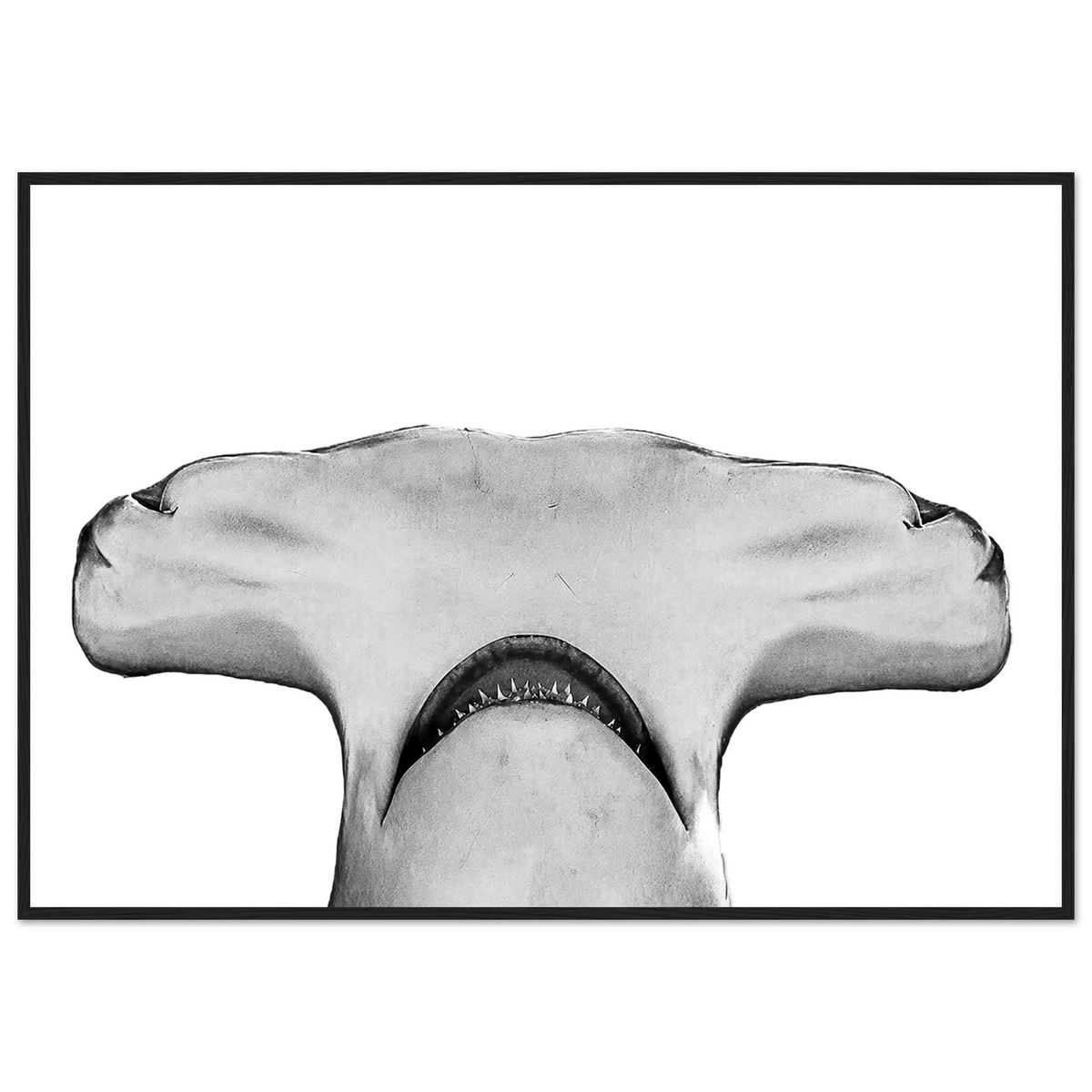
This $320.00 framed option uses heavyweight 200 gsm / 80 lb white matte paper with a smooth, non-reflective surface. It is displayed in a durable pine wood frame with a premium profile, a shatterproof transparent plexiglass front, and a hanging kit for ready-to-hang installation. The materials are FSC-certified or equivalent.
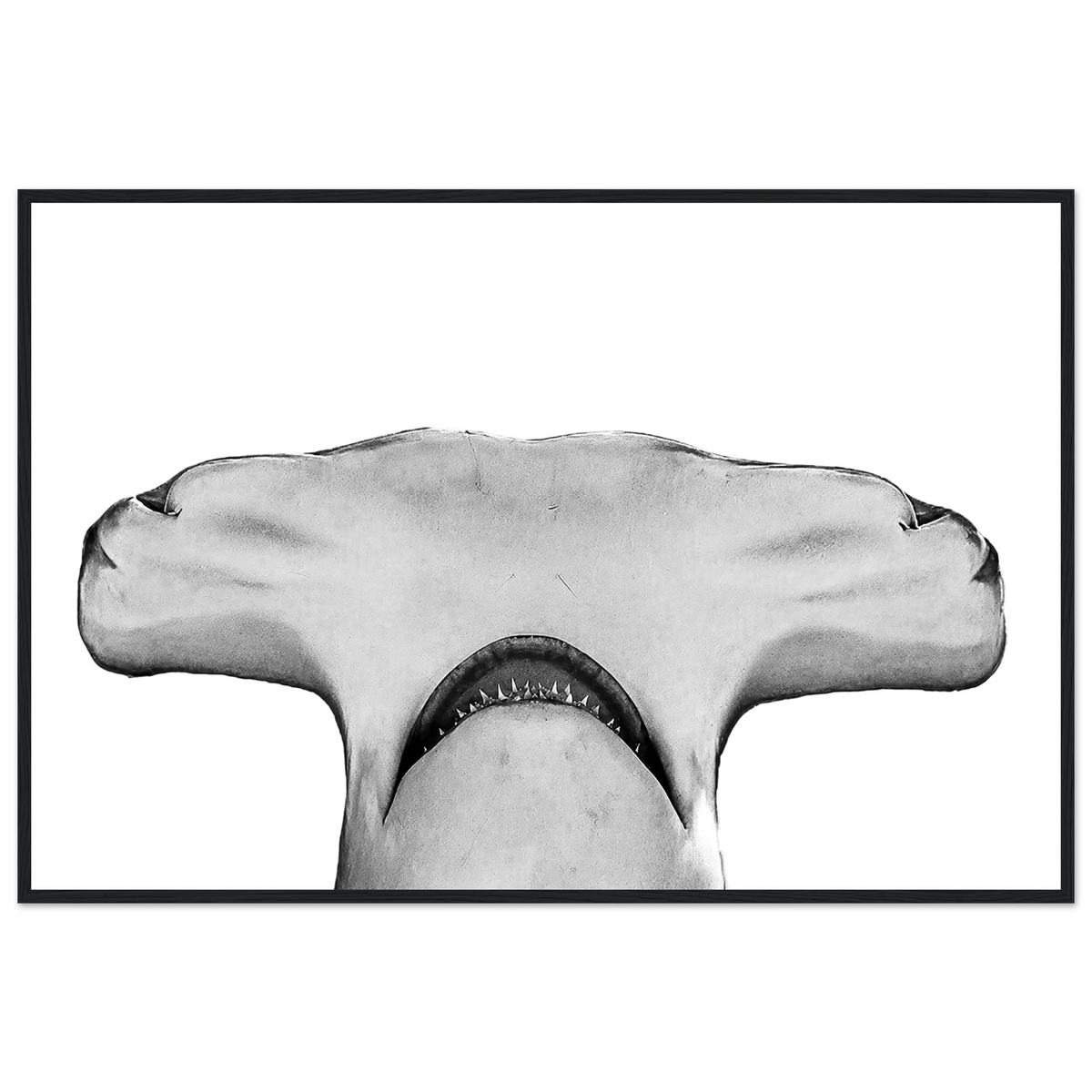
I see this format working especially well in a marine-themed office, coastal living space, hallway, or room centered around ocean conservation. The frame adds structure and warmth, while the low-angle photograph keeps the subject bold and unmistakable.
Styling Ideas
I would use this photograph in several types of interiors:
- Marine-themed office: Pair it with natural wood, maps, blue-gray accents, and simple shelves.
- Coastal living space: Use the sandy background alongside linen, pale wood, and restrained ocean colors.
- Minimalist interior: Let the shark remain the single visual focal point on a plain wall.
- Professional space: Add it to a reception area, conference room, studio, or office where the subject can start a conversation about the ocean.
The image is visually strong without requiring a busy room around it. That makes it flexible wildlife photography wall art for both residential and professional settings.
Conservation That Supports the Ocean
Through Moss Apparel and Moss Fine Art, 10% of profits support nonprofit conservation partners on a quarterly basis. For this Great Hammerhead photograph, that support includes the Bimini Shark Lab collection, which supports shark and ray research and protection.
I believe a photograph of a wild animal should help strengthen the connection between people and that animal. When I sell this image, conservation is part of the purpose: not an afterthought.
Shop the Photograph
I made this image in a real underwater encounter in Bimini, Bahamas. The shark chose the distance, the direction, and the pace. I only had to be present, stay respectful, and make the photograph when the moment came together.
SHOP THE GREAT HAMMERHEAD SHARK ALUMINUM PRINT
@MOSSAPPAREL
Follow Moss Apparel and Moss Fine Art for wildlife photography, ocean photography, new fine art photography prints, and conservation-focused work from the field.
About Robert Moss
For me, nature photography begins with respect. I believe the best wildlife photographs come from observing rather than interfering: by allowing an animal, landscape, or moment to exist naturally and being patient enough to capture it as it unfolds. My goal is not simply to photograph wildlife, but to create images that convey the character, beauty, scale, and vulnerability of the natural world.
I have been photographing for 10 years across North America, Central America, Southern Africa, Sri Lanka, Australia, the Caribbean, and Europe. My specialties include North American wildlife and landscapes, the American West, mountain scapes, hawks, pronghorn, bison, deserts, coyotes, lakes, ocean scapes, sharks, fish, underwater life, and mangroves.
My work has been seen in Greenwich Freepress, select REI locations for apparel, and Designspec for fine art.
From wildlife encounters to remote landscapes and underwater environments, I am drawn to moments that remind us how extraordinary the wild still is. I approach each photograph with the intention of keeping the scene authentic, preserving the natural behavior of the subject and the atmosphere of the place.
I never stress, chase, bait, corner, touch, or significantly alter an animal’s behavior for a photograph. I use long lenses when appropriate and let wildlife control the encounter. Early morning, late afternoon, storms, fog, backlighting, and unusual conditions often produce the best nature photographs.
That philosophy carries through to Moss Apparel and Moss Fine Art. The photographs are not only meant to be seen; they are intended to create a greater connection with the places and species they represent. Conservation is at the heart of that mission because this approach becomes harder each year as the world changes, wildlife numbers decline, and natural spaces are threatened.
Through Moss Apparel and Moss Fine Art, 10% of profits support nonprofit organizations working in wildlife conservation, habitat protection, and ocean restoration. My hope is simple: to create photographs that bring people closer to nature while helping protect the wild places and wildlife that made those photographs possible.
Robert Moss
Founder & Photographer, Moss Apparel