FREE SHIPPING FOR PURCHASES OVER $60
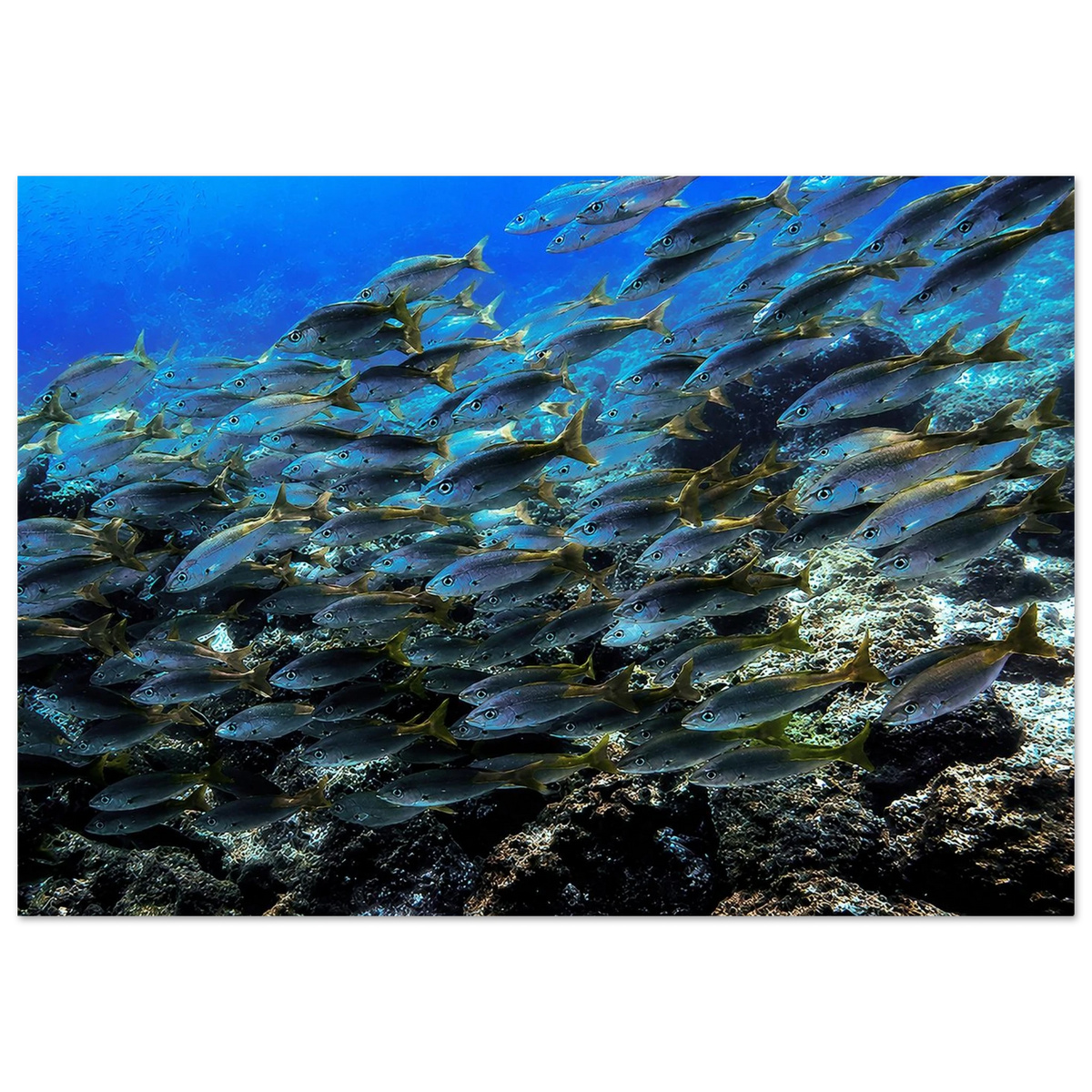
A school of fish can change the entire feeling of an underwater scene. One moment, the water seems open and quiet. The next, hundreds of fish move across the frame as one living form.
I captured that movement while scuba diving in Costa Rica. About 60 feet below the surface, I drifted with the current around a volcanic island, working with a SeaLife Pro camera and large lights. The conditions were not simple. Depth, current, murky water, and limited light all affected the shot.
The result is School of Fish, a striking underwater photograph that connects fine art with a practical conservation message: healthy oceans need protection, clean water, and active restoration.
This collection brings together ocean photography prints, marine life imagery, and conservation-focused apparel for people who want nature-inspired design with a clear purpose.
The Field Story Behind the Image
I was scuba diving around a volcanic island in Costa Rica when I encountered the school of fish. At approximately 60 feet down, I had to drift with the current rather than remain completely stationary.
That changed the way I approached the photograph.
Underwater photography requires constant adjustment. The subject moves. The photographer moves. Water conditions can reduce contrast and color. Artificial lights become important, especially when natural light is limited. I used large lights with my SeaLife Pro camera to bring definition to the fish and the surrounding reef environment.
The image is not simply a record of a dive. It shows a moment of coordination and movement in a marine ecosystem. Each fish is part of a larger pattern, but the group still contains individual details. That balance gives the photograph its visual energy.
It also gives the image its conservation meaning. Marine life depends on functioning habitats. Protection zones and marine protected areas can help reduce pressure on important underwater ecosystems, giving fish and other wildlife space to feed, reproduce, and move through their natural environment.
Protection is not a single solution. It works alongside responsible fishing, habitat monitoring, pollution prevention, and local community involvement.
Meet the School of Fish Print
School of Fish Ocean Fine Art Aluminum Print – Photography by Robert Moss brings Robert’s Costa Rica underwater photograph into a clean, modern display format.
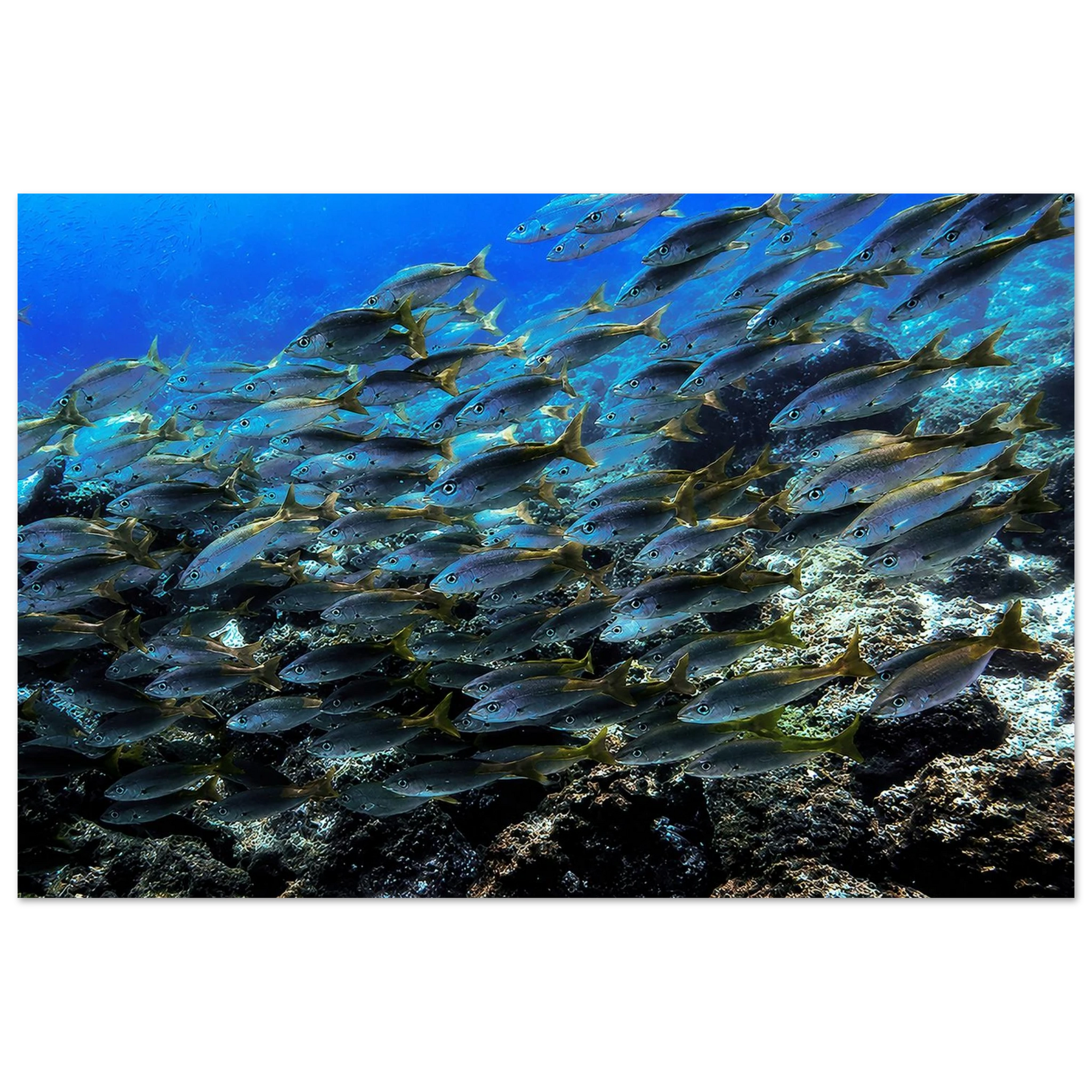
Printed directly on white-coated Aluminum DIBOND®, the artwork has a lightweight, rigid 3mm profile with a glare-free matte finish. The surface is UV- and moisture-resistant, making it suitable for living rooms, offices, studios, and other modern spaces. A hanging kit is included.
The material supports the photograph without distracting from it. Crisp details, blue water, and the movement of the fish remain the focus.
The print is available in multiple sizes, including:
- 20 × 30 cm / 8 × 12″
- 40 × 60 cm / 16 × 24″
- 60 × 90 cm / 24 × 36″
- 70 × 100 cm / 28 × 40″
10% of profits from this artwork support Seven Clean Seas to help combat plastic pollution.
SHOP THE SCHOOL OF FISH PRINT
Why Marine Protection Zones Matter
Marine protected areas are designated sections of ocean where certain activities are limited or managed to protect habitats and wildlife. Rules vary by location. Some zones restrict fishing or extraction. Others protect particular habitats, migration routes, or breeding areas.
For a diver, these protections can be visible in the form of more active marine life and healthier underwater environments. A school of fish is not separate from its surroundings. It relies on the reef, rocky structure, water quality, food sources, and broader ecosystem around it.
That is why conservation must look beyond one species or one photograph.
A healthy marine environment supports many connected forms of life. Protecting habitat can help maintain those connections. Reducing plastic pollution can prevent additional stress. Monitoring underwater ecosystems can provide information for better decisions.
Robert’s photograph makes this larger subject easy to understand. You see the school first. Then you notice the setting. Finally, the image points to the conditions that allow marine life to thrive.
Seven Clean Seas and the Plastic Problem
Marine protected areas are important, but boundaries alone cannot stop plastic from entering the ocean. Waste can move through rivers, coastlines, currents, and offshore areas. Even remote marine environments can be affected.
Seven Clean Seas works to prevent and remove ocean plastic pollution through several approaches, including river collection, offshore recovery, riverine interception, coastal cleanups, household waste management, and community education.
That combination matters. Cleanup removes pollution that is already present. Prevention reduces the amount of new plastic reaching the ocean. Education and community programs help make long-term change possible.
Moss Apparel’s partnership with Seven Clean Seas connects a physical product to this work. The School of Fish Ocean Fine Art Aluminum Print – Photography by Robert Moss is designed to be enjoyed as wall art, and 10% of profits support an organization focused on reducing ocean plastic pollution.
The goal is not to suggest that one purchase solves a complex environmental problem. It does not. The goal is to make support easier to understand and easier to practice.
Wear the Conservation Message
Fine art is one way to keep ocean conservation visible. Apparel is another.
Moss Apparel creates nature-inspired clothing featuring real wildlife and landscape photography. The range includes T-shirts, hoodies, long-sleeve shirts, crewnecks, and youth apparel. The designs are made for everyday use, with comfort and durability treated as practical priorities.
For customers searching for marine life apparel or sustainable ocean conservation apparel, the value is straightforward:
- Real wildlife and underwater photography
- Comfortable pieces for everyday wear
- Durable construction for regular use
- A direct connection to conservation
- Apparel that starts conversations without excessive branding
The School of Fish image also pairs with four Seven Clean Seas apparel products:
- Seven Clean Seas Marine Life Graphic Hoodie
- Seven Clean Seas Marine Life Crewneck Sweatshirt
- Seven Clean Seas Marine Life Long Sleeve Crew T-Shirt
- Marine Life School of Fish T-Shirt
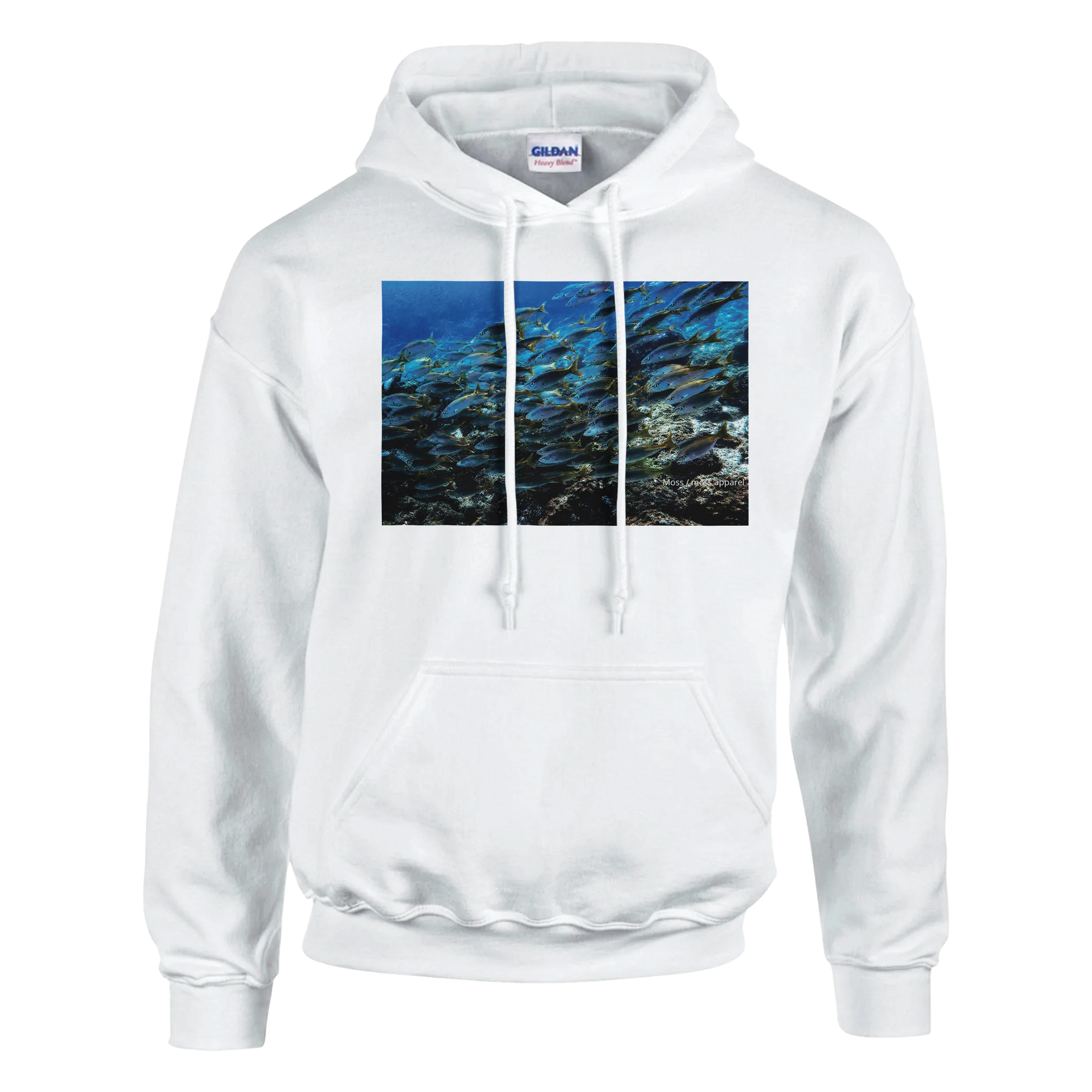
If you want to wear the image instead of hang it on the wall, these pieces carry the same ocean-focused subject into everyday apparel. I drifted with the current to make this photograph, and that same field experience carries into the collection.
When choosing a product, check its individual product page for the exact title, available colors, sizes, materials, care instructions, and conservation partner. These Seven Clean Seas products support marine cleanup work through 10% of profits. Moss Apparel also provides free shipping for purchases over $60.
A Collection Built Around Attention
The School of Fish image works because it rewards attention.
From a distance, the photograph creates a strong field of blue and silver movement. Closer inspection reveals the way individual fish break from the group. The composition feels active without becoming chaotic.
That makes it suitable for minimalist interiors. The image has enough visual depth to serve as a focal point, but the color palette remains controlled. It can work above a desk, in a living room, or in a space designed around natural materials and neutral tones.
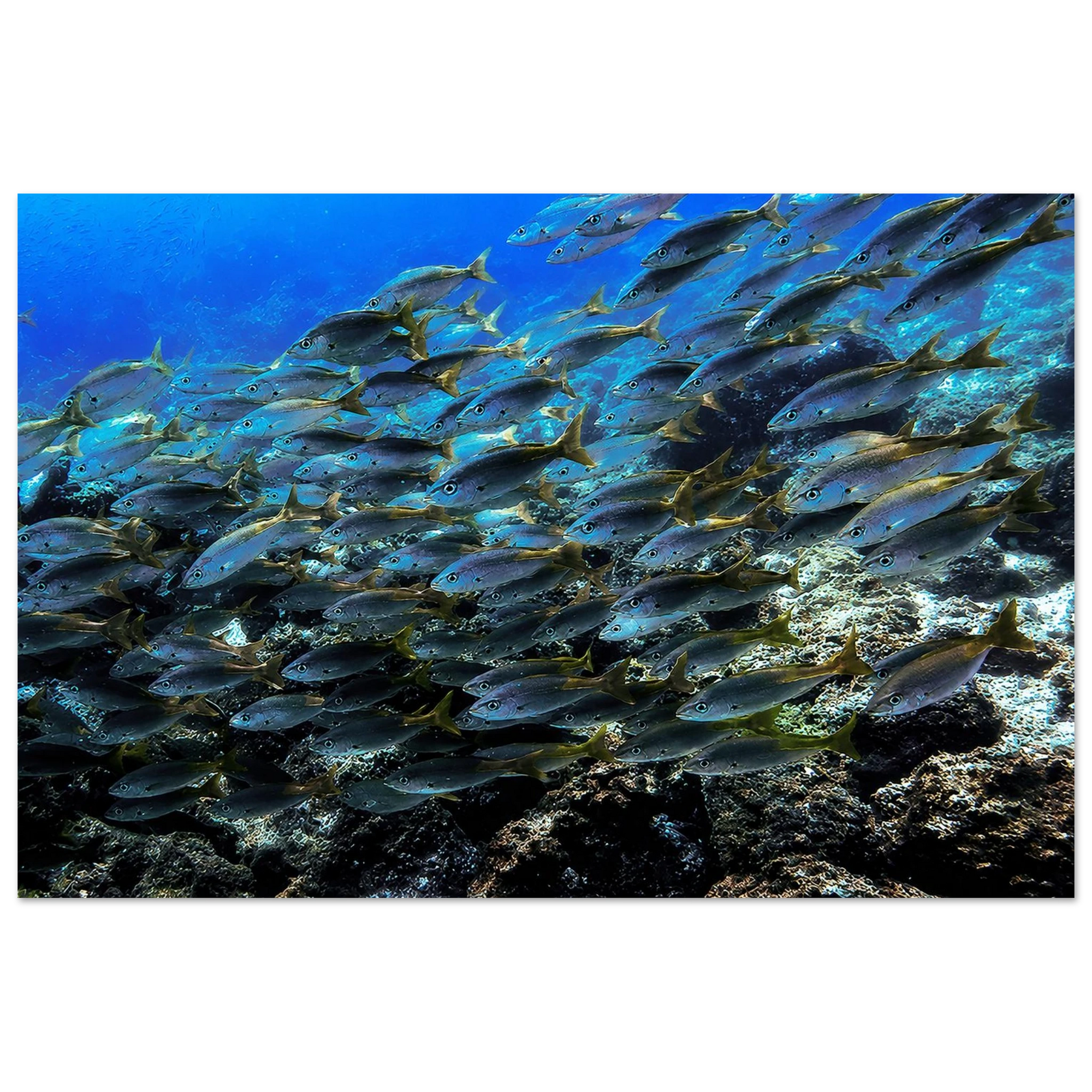
It is also a useful reminder that underwater ecosystems are not distant or abstract. They are made up of visible, active communities. The school of fish is both the subject of the photograph and the reason protection matters.
Support Ocean Conservation Through What You Choose
Conservation-focused shopping should be clear.
Choose a product connected to a documented partner. Review the product details. Understand where the contribution goes. Use the purchase as one part of a wider approach that can include reducing single-use plastics, supporting responsible organizations, and learning more about marine protection.
Moss Apparel’s nonprofit partnerships are built around that connection between nature, design, and direct support. The School of Fish print specifically supports Seven Clean Seas, while the wider Moss Apparel mission directs 10% of purchases toward shark, pollinator, and wildlife conservation efforts.
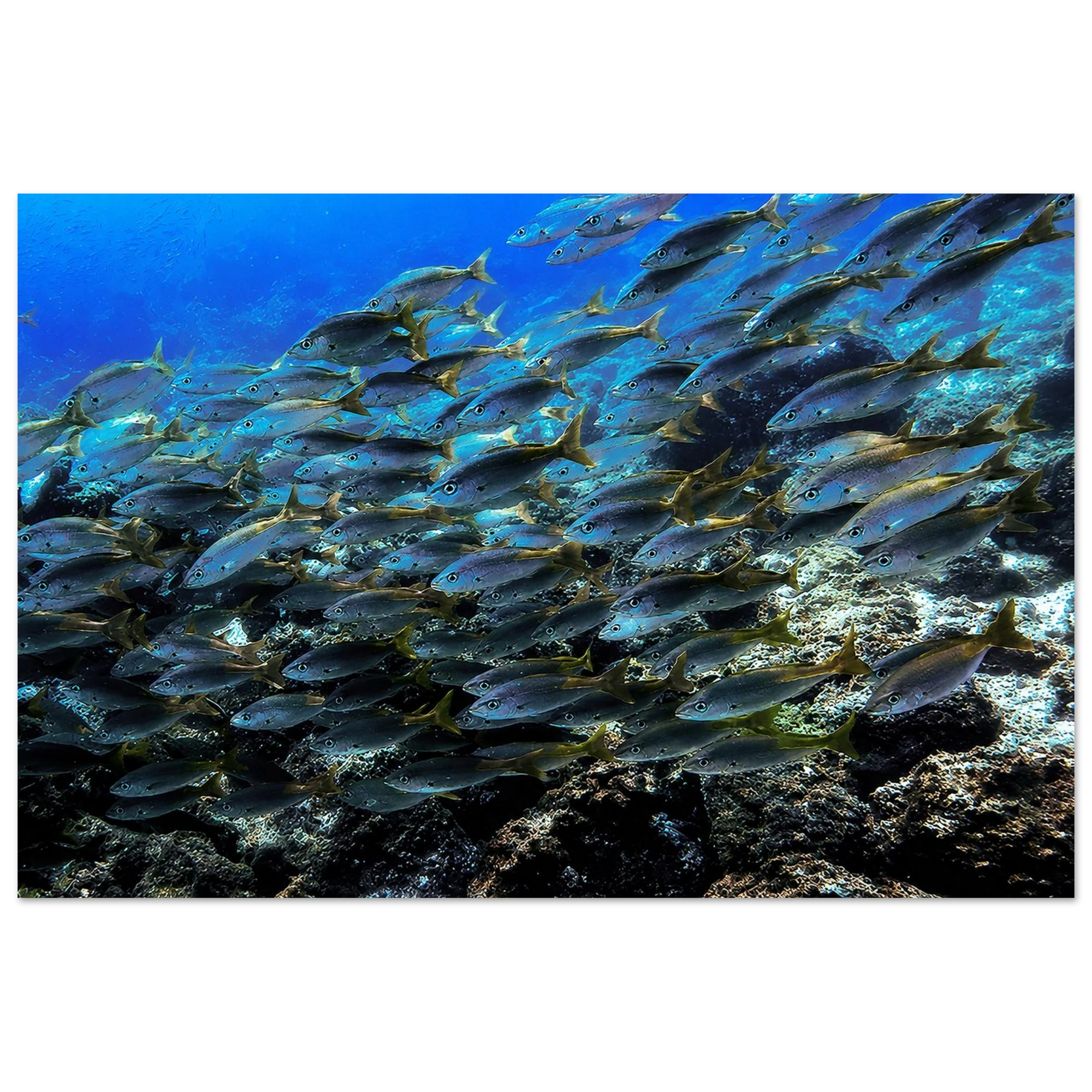
Robert’s Costa Rica photograph began with a dive, a moving current, a camera, and difficult underwater light. It now offers a simple way to bring the ocean into a home while supporting work to protect it.
SHOP THE SCHOOL OF FISH COLLECTION